
Disability Services & Support Organization, Kimberly, WI
Stay safe at home in Kimberly with our disability services and support organization—custom ramps, stair lifts, and grab bars. Call (920) 585-8780
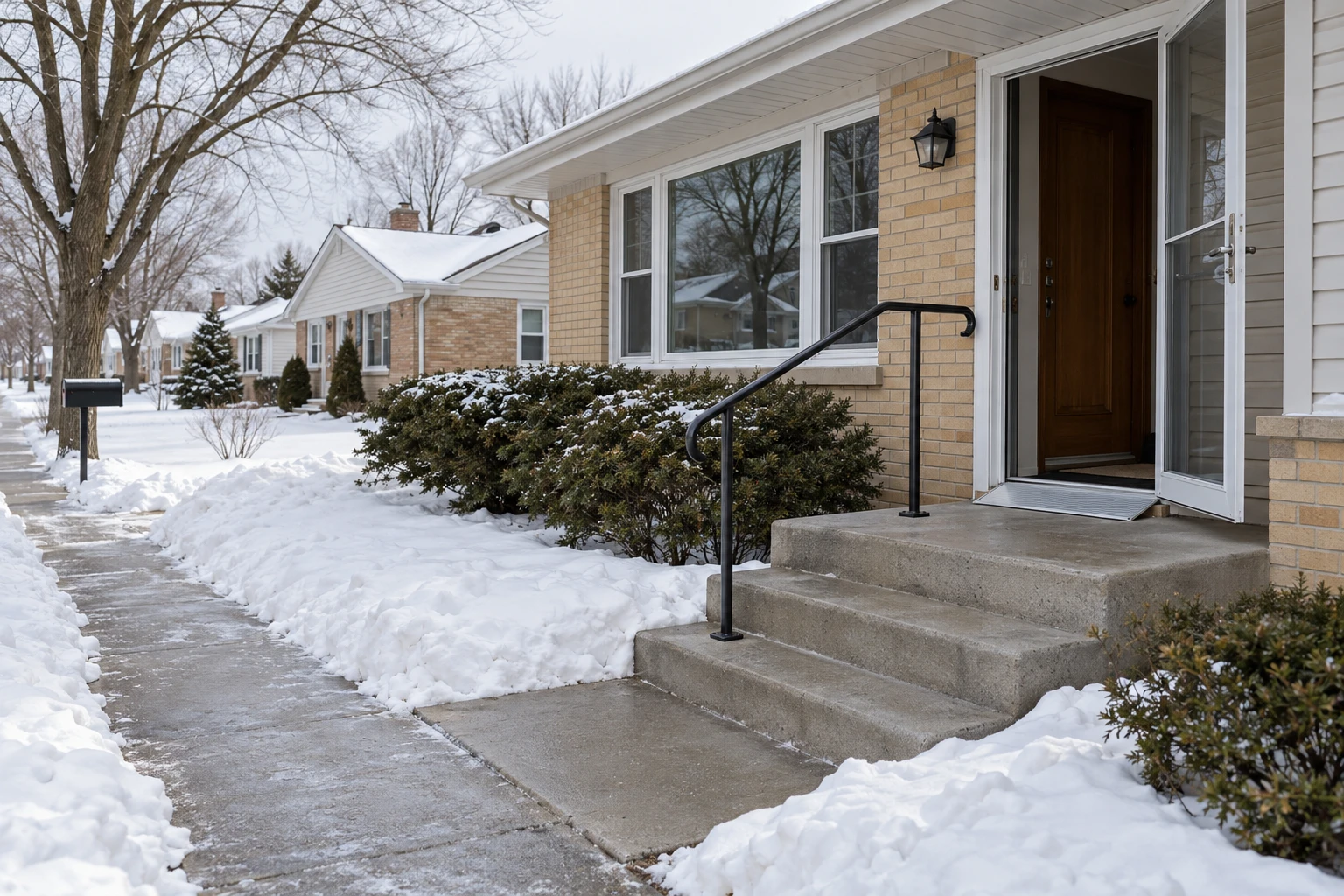
When freezing rain glazes the front steps in Kimberly, a raised stoop becomes the hardest part of the day. For a parent, a veteran or anyone living with a disability, that stoop is just the start. Inside, 28-inch doorways, steep basement stairs and tight bathrooms pile on. Families looking for a disability services and support organization in Kimberly, WI often want one thing: someone who looks at the person first, then builds the fix. That’s what Dodd Home Safety does, and Bill Dodd and Jaci Dodd run it together, so phone us at (920) 585-8780 and we’ll talk through what you’re seeing at home.

Why Mill-Era Kimberly Homes Need a Closer Look
Kimberly grew up around the paper mills on the Fox River. Many of the 1950s mill-worker bungalows from that era still stand, along with older two-story homes. They were built for a different kind of life. Doorways are often 28 inches wide. Basement stairs run steep. Front stoops sit high off the ground.
Winter adds to it across the Heart of the Valley. Freeze-thaw cycles crack concrete and glaze it with ice by morning. A step you handled fine in July becomes a risk in January. The World Health Organization reports that the number of older adults worldwide is growing fast[1]. Here, that means more neighbors aging in the same houses where they raised their kids.
Inside, the bathroom is often the tightest room. Small footprints leave little space to turn or transfer. We add grab bars, raised toilets and transfer poles where they help. We work inside your home’s existing layout.
Help is out there, and it comes in pieces. The Outagamie County Aging and Disability Resource Center (ADRC) is a good place to start on benefits and programs. Stores can sell you a lift or a ramp. What’s often missing is someone who watches how you walk, turn and transfer, then builds the fix in your own home. That’s the gap we fill.
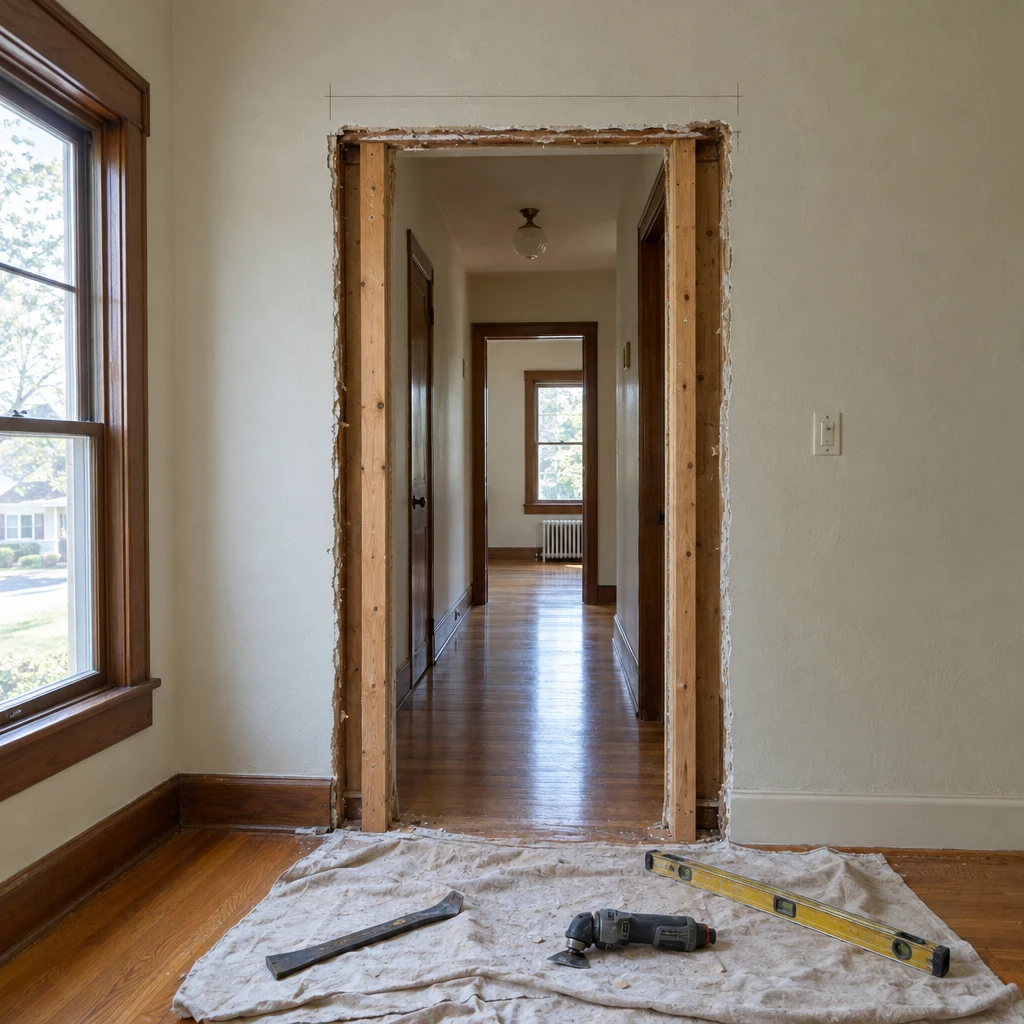
Take the narrow doorway. We don’t hand you a fixed number. We measure your walker or wheelchair in person. Then we either install offset hinges, which gain about two inches of clear swing, or widen the opening only if your mobility aid needs it.
Veteran Home Safety Modifications
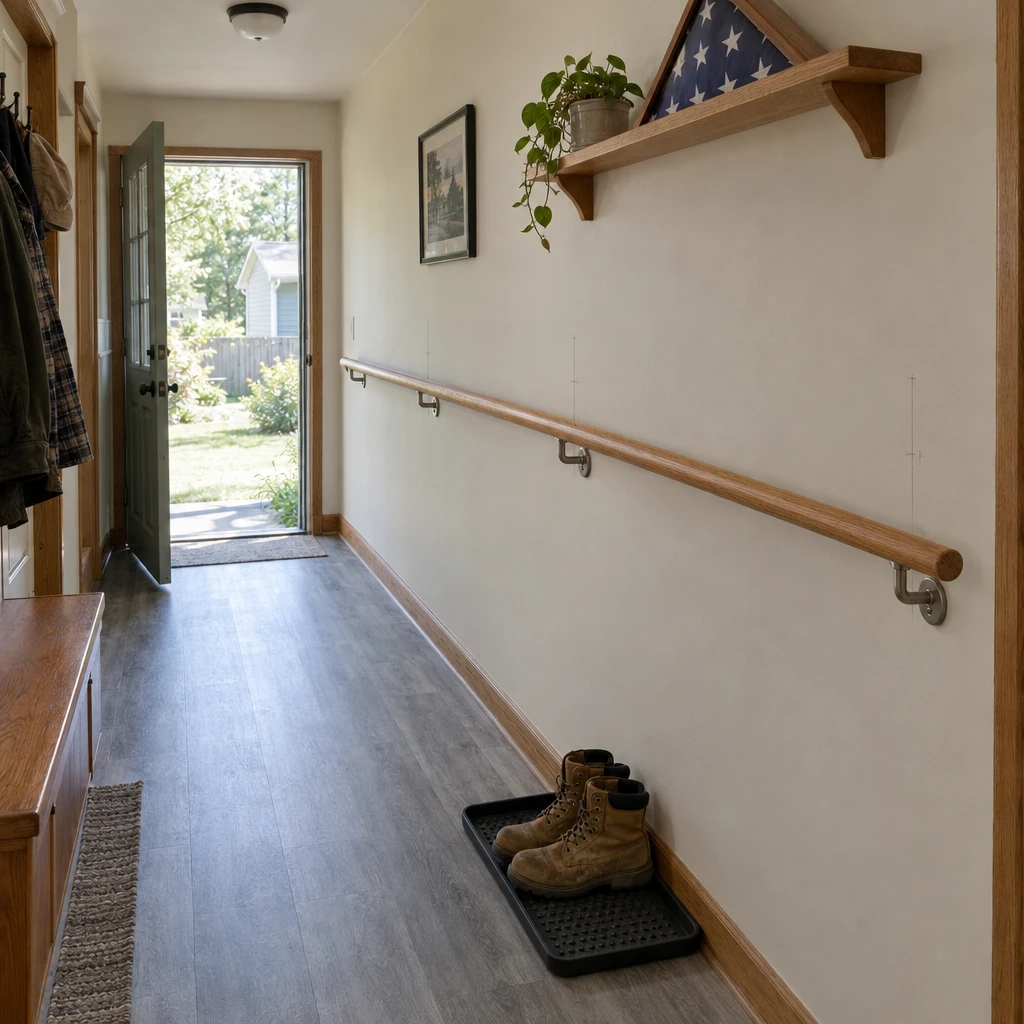
Veterans often come home with injuries that make an old bungalow hard to live in. Our veteran home safety modifications start with a visit to see how you move through your house. Then we build what fits, like ramps, rails, grab bars and doorway changes. The VA offers Specially Adapted Housing and Special Home Adaptation grants for eligible veterans[2]. The Outagamie County Veterans Service Office can also point you toward funding.
Medicaid Waiver Home Modifications
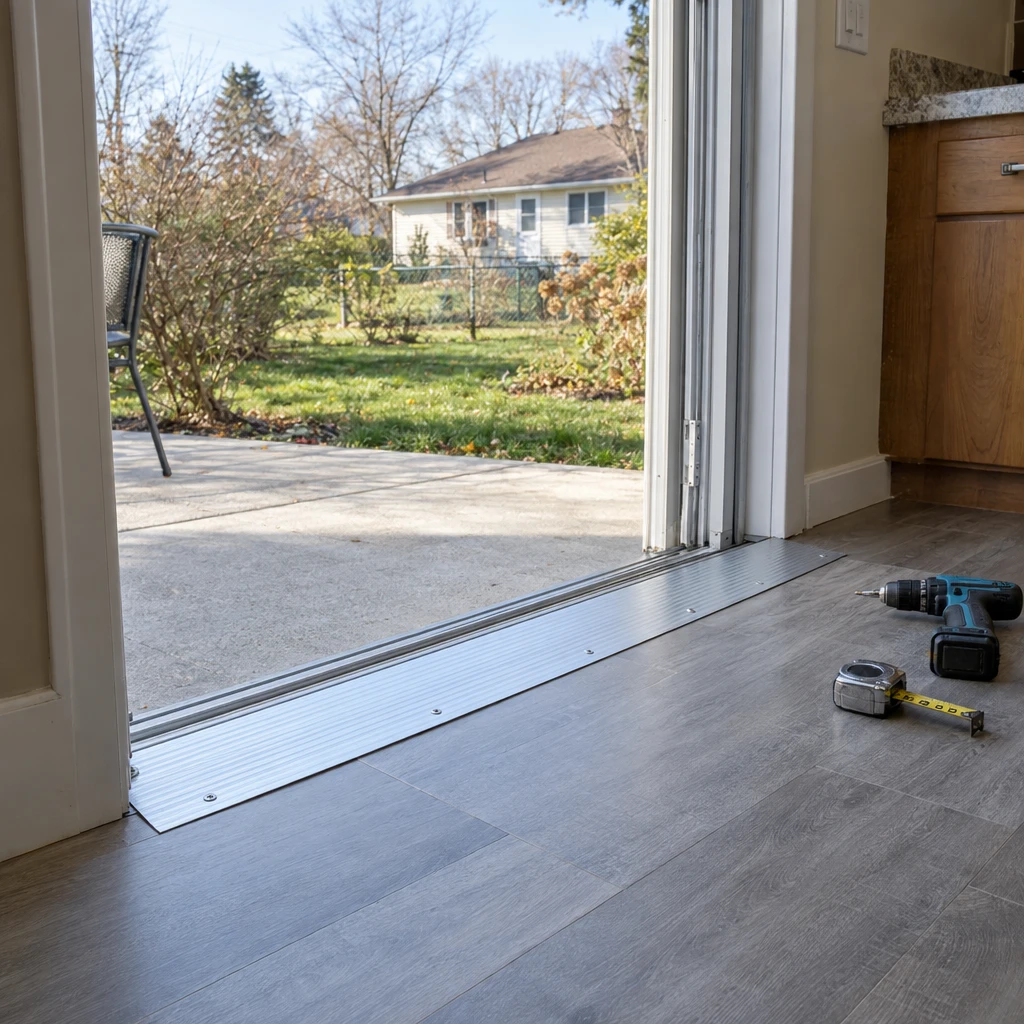
Wisconsin Family Care and IRIS waiver programs can cover some home changes for people who qualify. Our Medicaid waiver home modifications begin with measuring the house and writing down what the person needs. We explain each part of the work in plain language, so your care team can see what’s being built and why. That might be a threshold ramp at the back door or a lever handle on the bathroom door. We only quote a job after visiting your home in person.
Why Neighbors Choose Dodd Home Safety
Clinical expertise. A licensed contractor. Two partners who work side by side. That’s the short version of Dodd Home Safety, and each piece does real work.
Bill is a licensed Occupational Therapy Assistant. He does home safety evaluations and handles the contracting and installation work. Jaci holds a Physical Therapist Assistant credential. She does mobility, transfer and home safety evaluations. Dodd Home Safety holds a Wisconsin Dwelling Contractor Qualifier credential, the contractor license behind the building.
The result is medically grounded home modifications, backed by real craftsmanship. Bill and Jaci evaluate how you move first. The building follows what they find. Nothing gets built on a guess.
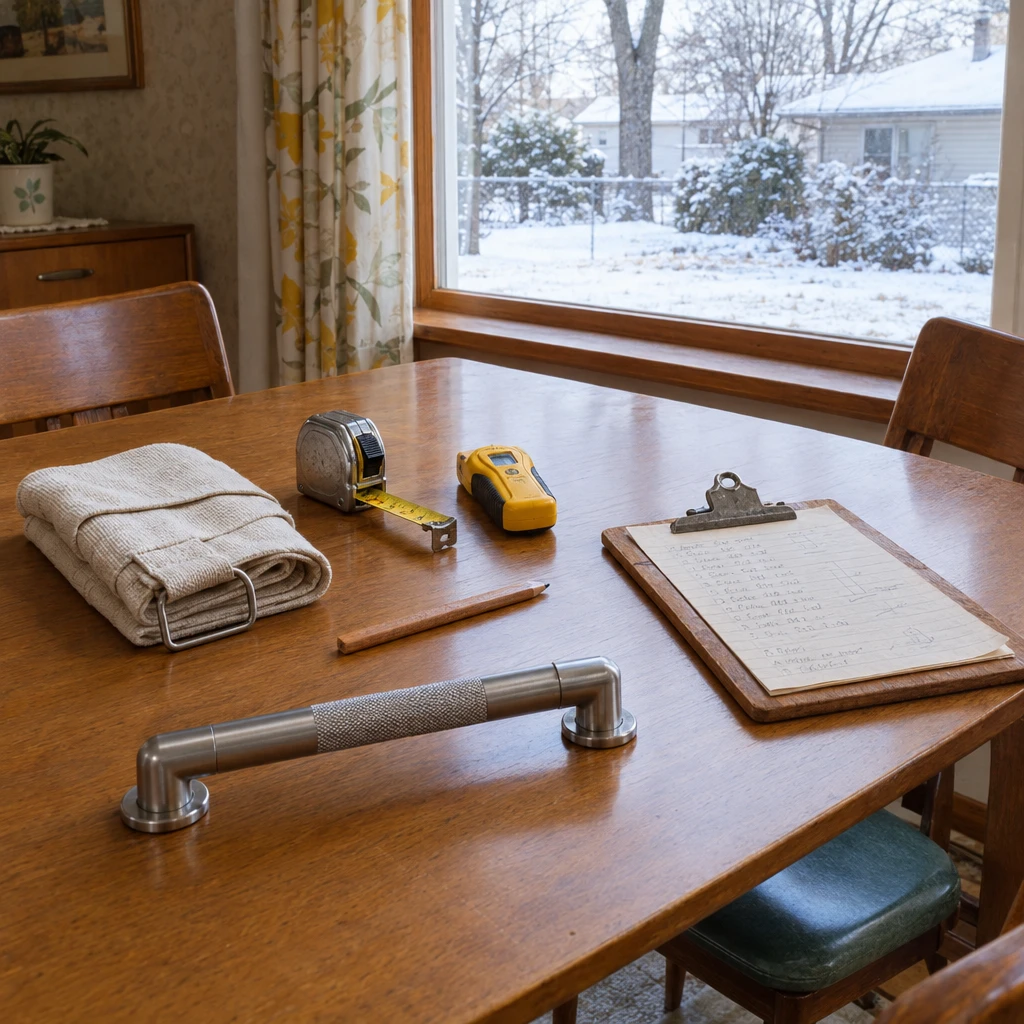
We don’t hand you generic catalog solutions. Each piece is chosen for your house after an evaluation, not a sales pitch. Grab bars anchor into solid or reinforced wall blocking or studs, never just drywall or loose tile alone. And safety doesn’t have to look medical. A rail or a bar can look like part of the house.
How a Visit Works Before Any Building Starts
Every project here is an evaluation first and a construction project second. Here’s how a visit goes.
If you’re not sure which kind of help fits, start at our main home safety page. It lists everything we do, from grab bars to stair lifts. Pick the one closest to your situation, and the on-site visit settles what fits.
We Start With How You Move
Bill and Jaci watch how you walk, balance and get in and out of a bed, chair or tub. Jaci looks closely at mobility and transfers. Bill looks at home safety across the whole house. We ask what’s hard and what feels scary. No guessing.
We Measure Your House
Out come the tape measures. We measure doorways, stair rise and run, and bathroom clearances down to the quarter inch. For ramps, we follow ADA slope guidelines and fit the design to your entry, whether it’s aluminum or wood. Snow, ice and freeze-thaw shape those choices. Every job is quoted after an on-site visit.
We Build and Check the Fit
Bill and our installation crew do the building. When the work is done, we have you try it out. A grab bar should feel right in your hand. A ramp should feel steady on a January morning. If something feels off, tell us and we’ll take a look.
Frequently Asked Questions
What do you actually do for people with disabilities?
We evaluate how a person moves at home, then install what fits. That includes ramps, grab bars, stair lifts, handrails, lever handles, threshold ramps and doorway changes. For benefits counseling, the Outagamie County Aging and Disability Resource Center (ADRC) is a good starting point.
Do I have to widen every narrow doorway?
No. Older Kimberly homes often have 28-inch doorways, but there is no one-size answer. We measure your walker or wheelchair in person. Offset hinges gain about two inches of clear swing and solve it for many homes, and the opening is widened only when the mobility aid needs it.
Can a veteran get help paying for home changes?
Funding programs exist through the VA, and the Outagamie County Veterans Service Office can point veterans to them. The VA offers Specially Adapted Housing and Special Home Adaptation grants for eligible veterans. Eligibility depends on the person’s situation, so it helps to ask early.
How much does a ramp or grab bar job cost?
It depends on the house. A ramp’s cost follows the entry’s rise and run and the material, whether aluminum or wood. A grab bar job depends on the wall behind it. We inspect the space in person before giving a price.
Does Wisconsin Medicaid (Family Care or IRIS) pay for home accessibility modifications?
Wisconsin Family Care and IRIS waiver programs can cover some home changes for people who qualify. Coverage depends on the person’s eligibility and care plan. The Outagamie County ADRC can explain how to apply and what may be covered.
What happens during an on-site home safety evaluation after a stroke?
Bill and Jaci watch how the person walks, balances and moves in and out of a bed, chair or tub. Jaci looks closely at mobility and transfers, and Bill looks at home safety across the whole house. We then measure doorways, stairs and bathroom clearances down to the quarter inch. Nothing is built until that evaluation is done.
What local resources help seniors and people with disabilities stay independent in Kimberly, WI?
You can start with the Outagamie County Aging and Disability Resource Center (ADRC) to learn about benefits and programs. Wisconsin Family Care and IRIS waiver programs can help pay for some home changes. Veterans can also ask the Outagamie County Veterans Service Office about VA funding.
Ready to Get Started?
Dodd Home Safety — serving Kimberly, WI. Call us today.
References & Local Research
- [1] World Health Organization. (2022). Ageing and health: Key facts. WHO Fact Sheets. https://www.who.int/news-room/fact-sheets/detail/ageing-and-health
- [2] U.S. Department of Veterans Affairs. (2022). Specially adapted housing and special home adaptation grants. VA Benefits Administration. https://www.va.gov/housing-assistance/disability-housing-grants/