
Custom Handrail Installation in Kimberly, WI
Stay steady on every step in Kimberly with sturdy custom handrail installation for stairs, porches, and basements. Call us today at (920) 585-8780
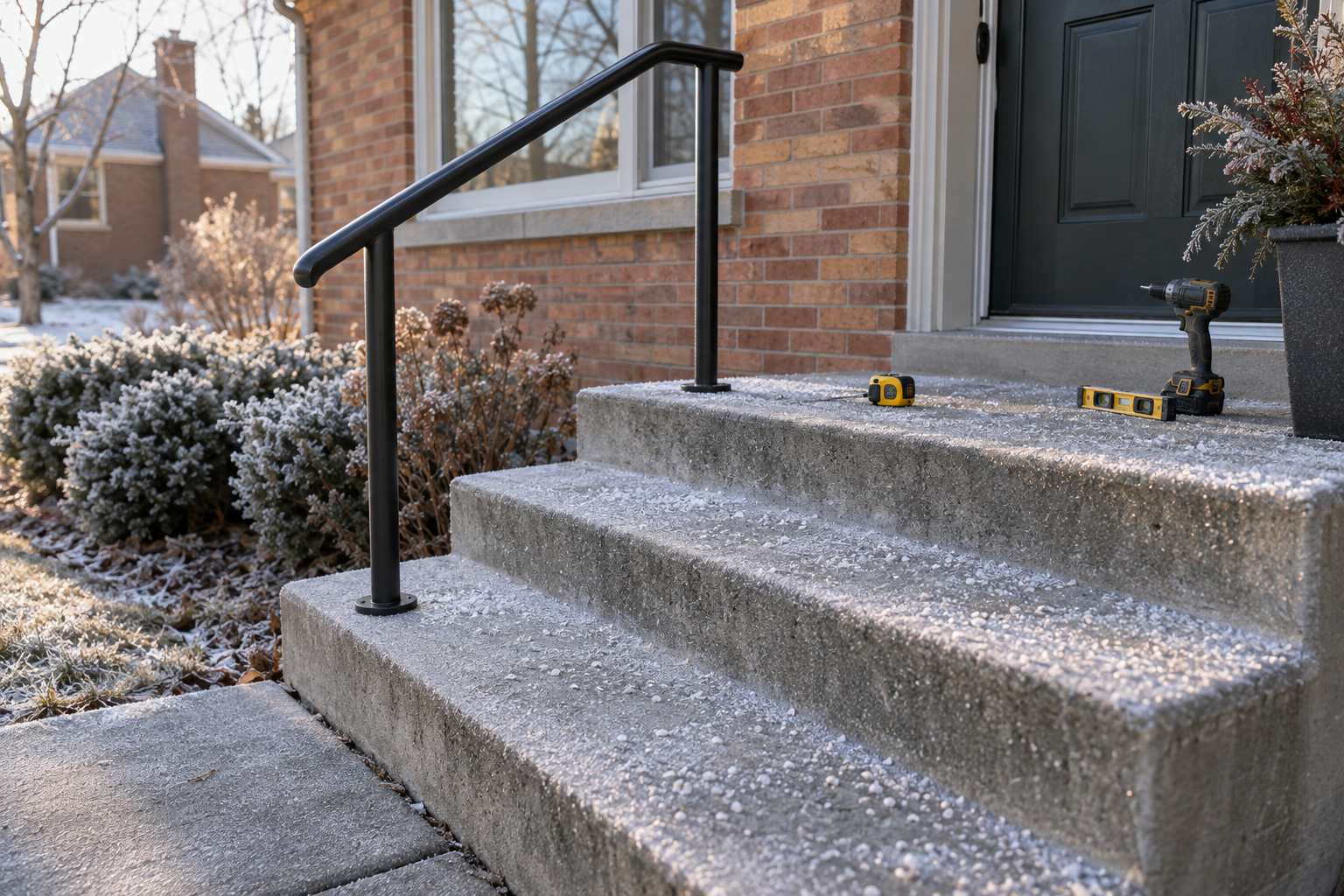
A loose rail on steep basement stairs, or no rail at all on icy front steps, puts every trip at risk. Dodd Home Safety comes to your Kimberly home, watches how you climb, reach, and grip, then builds and mounts a handrail sized to you and your stairs. Many homes here are 1950s mill-worker bungalows with narrow, steep stairs, so a rail that fits your hand matters. Winters here are hard on steps, and a rail has to hold through every freeze and thaw. Give us a call at (920) 585-8780 and we’ll talk through which steps worry you most.
Why Kimberly Stairs Need a Better Rail
Fox Cities winters are rough on steps. Neighbors still talk about the ice storms that glaze every step overnight. Freezing rain, a hard freeze, then a thaw: that cycle heaves concrete and loosens old rails. Falls are the leading cause of injury for older adults[1].
Many homes here are 1950s mill-worker bungalows and ranches. Their basement stairs run steep and narrow. Here’s what we see on the steps:
- Freezing rain glazes concrete steps and metal rails before sunrise.
- Freeze-thaw cycles heave porch steps and loosen rails set in old concrete.
- Steep basement stairs often have one weak rail, or none.
- Plaster walls hide thin backing, so rails need solid wood behind them.
- Narrow stairways leave little room, so rail shape and wall gap matter.
The state sets a floor. Wisconsin’s Uniform Dwelling Code (SPS 321) asks for at least one continuous, graspable handrail on any stair flight with more than three risers (the upright part of each step). The rail must sit 30 to 38 inches above the tread nosing (the front edge of each step). It needs at least 1.5 inches of wall clearance and a 200-pound load rating. We use those numbers as our starting point.
Where a Custom Rail Makes the Biggest Difference
A slip can happen on any step, inside or out. We install interior and exterior handrails in the spots below. Long hallways get one too when a hand needs steadying between rooms.
- Main staircases and split-level steps, where old rails often stop halfway.
- Steep basement stairways, ideally with a rail on both sides.
- Front porches and concrete entry steps built for ice and wet gloves.
- Garage-to-house steps and landings, where your hands are full.
- Backyard decks, patios, and ramps that face snow and rain.
A handrail is one piece of a safer house. Our home safety equipment options for Kimberly homes page shows how rails, ramps, and bars work together in an older home.
Exterior ramps need rails too, and we cover that in our wheelchair ramp work. Short wall stretches may need a grab bar instead of a full rail. If stairs are too hard even with a rail, a stair lift may fit better, and the on-site evaluation settles that.
What to Expect From Start to Finish
Off-the-shelf rails often miss the mark on older stairs. We look at how you move first, then we build. No guessing, no generic catalog solutions.
- We visit your home and watch how you climb, reach, and grip.
- We measure each flight, the wall gap, and your best hand height.
- We find solid studs behind the plaster, then pick the rail shape and finish.
- We mount the rail on sturdy brackets and turn the ends back into the wall.
- We check every bracket for a firm hold, then walk the stairs with you.
Safety doesn’t have to look medical. Pick a wood or metal finish that matches your trim, and add stair lighting so you can see each step.
Rails often come up alongside other jobs, like widening a narrow doorway or leveling a raised threshold. You’ll find those in our home modification work around Kimberly.

Why Kimberly Homeowners Choose Dodd Home Safety
Choosing who builds a rail you’ll lean on every day is a real decision. Dodd Home Safety is run by two partners, Bill and Jaci. Bill Dodd holds an Occupational Therapy Assistant license and a Wisconsin Dwelling Contractor Qualifier credential. Jaci Dodd holds a Physical Therapist Assistant credential.
Jaci handles mobility and transfer evaluations, checking how you move and how you get up and down. Bill handles home safety evaluations and the building and installing, with our installation crew.
That mix shapes a rail that fits your grip and reach. Careful craftsmanship carries it out. Most adults say they want to stay in their homes as they age[2].
- Rails sized to your hand and reach, chosen for your specific home.
- Evaluations that watch how you climb, turn, and rest on stairs.
- Rails on both sides of steep stairs when the walls allow.
- Clear answers on Wisconsin’s SPS 321 stair rail rules.
- Pointers toward possible funding through the Outagamie County ADRC, Wisconsin Family Care, IRIS waiver programs, and the Outagamie County Veterans Service Office.
Some neighbors need more than a rail. Our mobility and disability equipment for Kimberly homes page shows what else can make daily routines easier.
Frequently Asked Questions
How high should a stair handrail be in Wisconsin?
Wisconsin’s Uniform Dwelling Code (SPS 321) puts the rail 30 to 38 inches above the tread nosing, the front edge of each step. It also asks for at least 1.5 inches of wall clearance. We set the exact height inside that range after watching how you reach and grip.
Can you put a handrail on both sides of my Kimberly basement stairs?
Yes, when the stairway is wide enough and the walls have solid backing. The state asks for at least one continuous rail. Two rails give you a steady hand whichever way you’re heading, and we check both walls during the visit.
Do you install handrails on outdoor concrete steps in Kimberly?
Yes. We install rails on front porch steps, concrete entry steps, garage-to-house steps, and decks. We choose weather-ready materials and anchors that can handle freeze-thaw winters, so the rail stays tight.
When should you add handrails on both sides of stairs?
Two rails make the most sense on steep or narrow stairs, like many basement stairways in 1950s Kimberly bungalows. They also help if one of your hands is weaker than the other. Wisconsin’s code asks for one continuous rail on flights with more than three risers, the upright part of each step.
Is there help paying for a handrail in Outagamie County?
Possibly. Neighbors can look into the Outagamie County Aging and Disability Resource Center (ADRC), Wisconsin Family Care, and IRIS waiver programs. Veterans can ask the Outagamie County Veterans Service Office, or local VA programs, about home safety funding. What you qualify for depends on your situation.
How much does it cost to install a custom stair handrail?
The price depends on the length of the rail, the material, and whether it mounts on wood, plaster walls, or concrete. Outdoor rails set in concrete take different work than indoor wall-mounted rails. We measure your stairs in person to settle what fits your home.
Do you need a building permit to install a stair handrail in Kimberly?
Permit rules can vary by village and by the scope of the job. A simple rail replacement is often treated differently from new stairs or larger structural work. The on-site evaluation settles what applies to your stairs.
Ready to Get Started?
Dodd Home Safety — serving Kimberly, WI. Call us today.
References & Local Research
- [1] Centers for Disease Control and Prevention. (2023). Falls are the leading cause of injury for older adults. STEADI Program. https://www.cdc.gov/steadi
- [2] AARP Public Policy Institute. (2021). Home and community preferences survey: A national survey of adults ages 18-plus. AARP Research. https://www.aarp.org/research/topics/community/info-2021/home-community-preferences.html