
Hospital Discharge Home Setup in Kimberly, WI
Get fast, safe Hospital Discharge Home Setup in Kimberly before your loved one comes home. Ramps, grab bars, and stair lifts. Call (920) 585-8780 Many families also find that Lever Door Handle Installation in Kimberly, WI makes entryways and interior doors easier to open, and you can learn more about lever door handle installation for reduced grip strain during recovery.
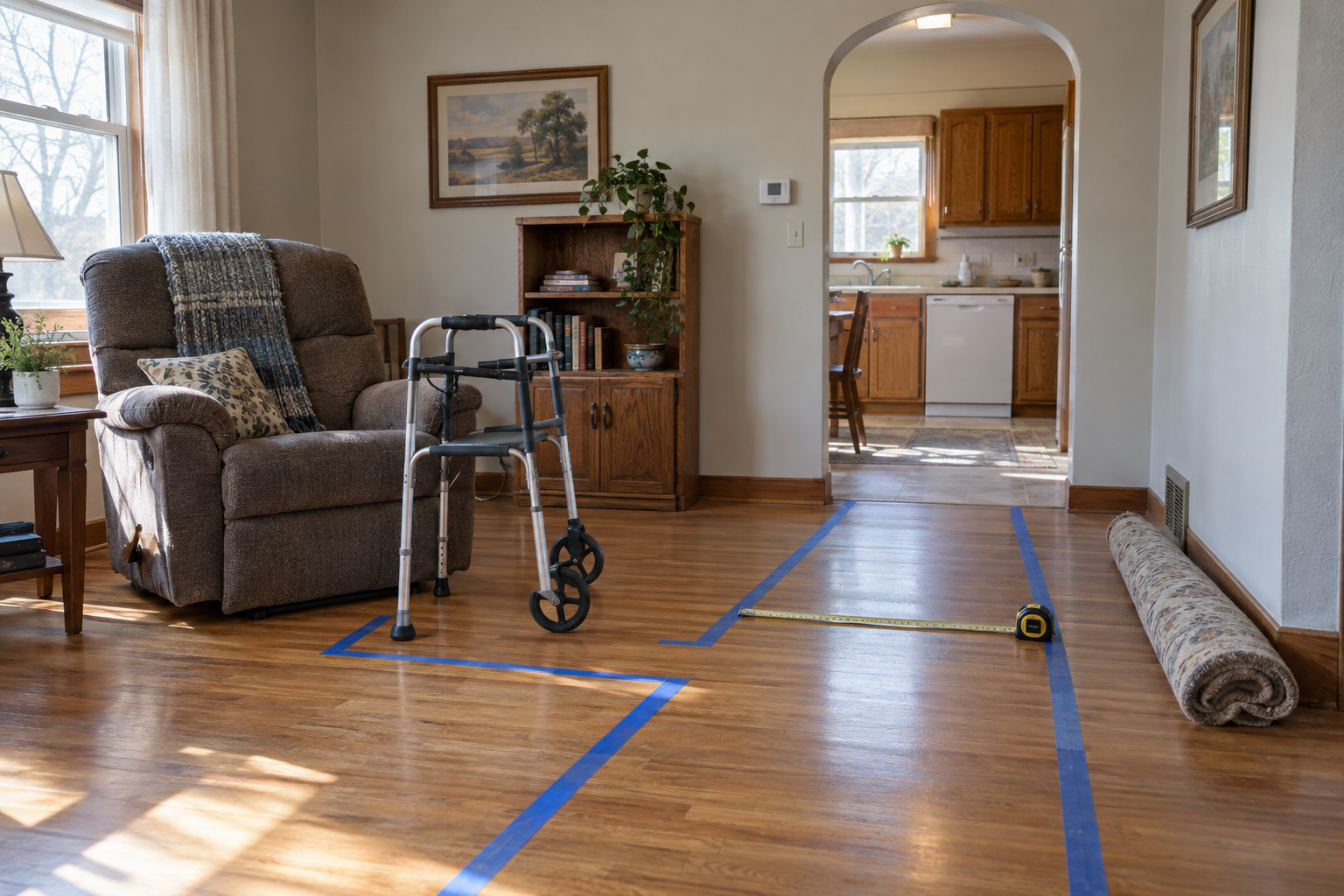
A hospital stay ends, and the home you return to may no longer fit the way you move. Narrow doors, steep steps, and a tight bathroom can make the first week back risky. Dodd Home Safety comes to your Kimberly home, measures how you actually move, and sets up the safety equipment that fits. Give us a call at (920) 585-8780 and tell us your discharge plan. We’ll talk through what your house needs first.
Why the First Week Home Is Hard in a Kimberly Bungalow
Many homes around Kimberly are 1950s mill-worker bungalows. They often have 28-inch doorframes, steep basement stairs, and raised entry thresholds. Those details matter more after a hospital stay, when a walker, cane, or wheelchair comes home too.
Winter adds its own trouble. Fox Cities winters bring ice and packed snow to front steps just when balance is weakest. Falls are the leading cause of injury for older adults[1]. A short ramp for a raised door sill or a solid rail at the entry can change that first trip inside.
Most people want to heal in their own house, too. National survey data show most adults want to stay in their homes as they age[2]. Here’s where we look first in a Kimberly home:
- The entry: front steps, back door sill, or garage landing, where a ramp or rail may be needed.
- The bathroom: grab bars, a transfer pole, a shower seat, and toilet safety changes.
- The bedroom: clear floor space, bedside lighting, and a steady way to stand up.
- Hallways and doors: offset hinges, a wider opening, and lever door handles.
- Stairs, kitchen, and living room: a stair lift or stronger handrail, plus clear walking paths.
If you’re sorting out equipment for someone coming home, our disability equipment options for Kimberly homes show what we install and where it fits. Start there to see ramps, rails, lifts, and bathroom safety pieces side by side.
What to Expect, Step by Step
We don’t hand you a generic checklist. We come to your home and work from your real floors, doors, and stairs. Here’s how it goes:
- You tell us who’s coming home, the discharge date, and what mobility aid they’ll use.
- We visit the house and measure doorways, stairs, thresholds, and bathroom clearances.
- We watch how you stand, turn, and transfer, then choose equipment for your house, not a catalog.
- We walk you through what to do first and what can wait, before a single screw is turned.
- Our installation crew mounts each piece into solid backing and checks the fit with you.
For a narrow 28-inch doorway, we measure your walker or wheelchair in person. Then we either install offset hinges, which gain about two inches of clear swing, or widen the opening to fit your mobility aid.
Bathroom walls often need extra wood blocking behind them so hardware holds. That’s why grab bars mounted into solid backing start with finding what’s behind the wall. If the bedroom is upstairs and the steps are steep, we look at a straight or curved stair lift or a stronger handrail.
Cost worries are common right after a hospital stay. The Outagamie County Aging and Disability Resource Center (ADRC), Wisconsin Family Care, and the IRIS waiver program may help some families. If you’re a veteran, we can point you toward home safety funding through the Outagamie County Veterans Service Office (CVSO) or local VA programs.
Want to see how we measure movement before we recommend anything? Our home and mobility assessments in Kimberly explain how we check balance, turning space, and transfer height. It’s the same careful look we bring to every discharge setup.

Why Families Choose Dodd Home Safety
Dodd Home Safety is run by two partners. Bill Dodd is a licensed Occupational Therapy Assistant and a Wisconsin Dwelling Contractor Qualifier. He handles home safety evaluations, plus the contracting and installation work. Jaci Dodd is a Physical Therapist Assistant. Jaci handles mobility, transfer, and home safety evaluations.
That mix puts evaluation skill and construction skill in one place. We treat a discharge setup as a movement problem first and a building project second. We measure what you need, then fix it in the structure of the house. Safety doesn’t have to look medical, either.
- Bill and Jaci each look at how you move, so the plan fits your body and your house.
- Bill leads the installs with our installation crew, so the person who measured also oversees the build.
- Equipment is chosen for your home after an evaluation: no guessing, no generic catalog solutions.
- Rails, bars, and ramps are fitted to blend in with the house.
- We come to you in Kimberly, Appleton, Kaukauna, Little Chute, and Combined Locks.
Once you know which pieces your home needs, browse the safety equipment we install in Kimberly homes. You’ll see how bars, rails, and lighting work together in a 1950s house.
Frequently Asked Questions
How early should we set up the house before someone comes home?
As early as you can. Share the discharge date and we’ll tell you what’s realistic for your house. The entry, the bathroom, and the path from bed to bathroom usually come first.
Does this replace the hospital’s discharge instructions?
No. Your care team makes the medical decisions, and their instructions stay the guide. We turn those needs into changes in your house, like grab bars, a rail, or a doorway that fits a walker.
My Kimberly bungalow’s doorways are only 28 inches. Will a walker fit?
It depends on the walker or wheelchair, so we measure it in person. Offset hinges gain about two inches of clear swing, and sometimes that’s enough. If it isn’t, we can widen the doorway opening to fit your mobility aid.
Are there programs that help pay for home changes after a hospital stay?
Some families get help through the Outagamie County Aging and Disability Resource Center, Wisconsin Family Care, or the IRIS waiver program. Veterans can ask the Outagamie County Veterans Service Office about VA options. Each program has its own rules for who qualifies.
What mobility equipment might a home need for hospital discharge?
It depends on how the person moves and what the house looks like. Common pieces include grab bars, a transfer pole, a shower seat, toilet safety changes, a ramp or rail at the entry, and a stair lift. The on-site evaluation settles which ones fit.
How do you prepare a home for a loved one coming back from the hospital?
We start with the entry, bathroom, bedroom, hallways, and stairs. We measure doorways and thresholds and watch how the person stands, turns, and transfers. Then we pick equipment for that home and mount it into solid backing.
Who helps coordinate home changes before hospital discharge?
Your care team sets the medical needs, and you decide what the household can do. We take the equipment list and the mobility aid coming home and plan the changes in the house. Bill leads the installs with our installation crew, and Jaci evaluates mobility and transfers.
Ready to Get Started?
Dodd Home Safety — serving Kimberly, WI. Call us today.
References & Local Research
- [1] Centers for Disease Control and Prevention. (2023). Falls are the leading cause of injury for older adults. STEADI Program. https://www.cdc.gov/steadi
- [2] AARP Public Policy Institute. (2021). Home and community preferences survey: A national survey of adults ages 18-plus. AARP Research. https://www.aarp.org/research/topics/community/info-2021/home-community-preferences.html